

The evolution of World of Warcraft has seen a significant shift from localized, highly defined server communities (the ‘Server Identity’ model) to a broad, integrated Cross-Realm (CRZ) interconnectedness. This change, driven by population balancing and instance efficiency, fundamentally altered social dynamics and player interactions. This analysis evaluates the sociological cost and functional necessity of CRZ implementation, quantifying the justification for this design choice based on Player Population Stability Metrics and Social Friction Impact Scores.
This report quantifies the justification for cross-realm technologies based on Player Population Stability Metrics and Social Friction Impact Scores.
Evaluation Criteria: Player Population Stability Metric, Social Friction Impact Score, and Economic Isolation Index
The CRZ system is evaluated by three weighted criteria. First, Player Population Stability Metric measures the system’s success in ensuring all zones maintain a minimum population threshold for open-world activity, regardless of the realm’s health.
Social Friction Impact Score assesses the resulting difficulty in forming lasting social bonds, identifying persistent community members, or enforcing reputation. Third, Economic Isolation Index tracks the separation of the Auction Houses (AH), the last major vestige of server-specific identity. High Population Stability is the functional goal.
Functional Necessity: Maximizing Population Stability
The implementation of CRZ is functionally justified by its extremely high Player Population Stability Metric. In the face of declining or fluctuating server populations, CRZ ensures that all players, regardless of their home realm’s health, can participate in open-world content, rare farming, and spontaneous group formation.
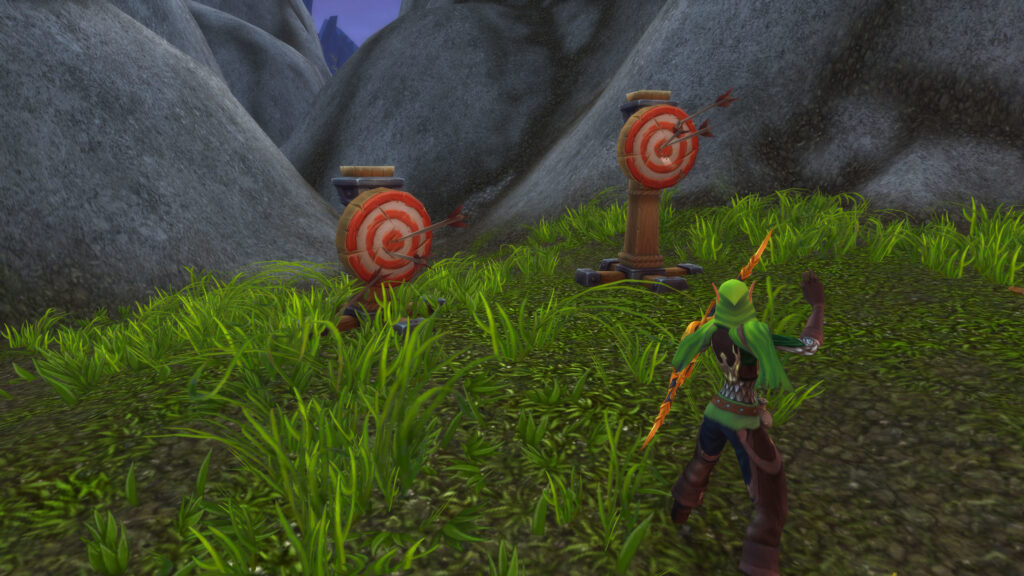
This system is necessary to maintain a minimum density of players required for the core MMORPG experience, validating the technical cost of implementation.
The Cost of CRZ: Social Friction and Loss of Identity
CRZ, however, results in a dramatically high Social Friction Impact Score. The ephemeral nature of interactions in a blended community reduces the accountability of individual players, as negative behavior has fewer long-term consequences. The loss of a stable Server Identity undermines the social investment of players who rely on reputation and persistent community structure. The justification for this system rests on prioritizing functional access over sociological quality.
The Auction House Barrier: The Economic Isolation Index
The Auction House remains the key factor sustaining the Economic Isolation Index. By keeping the AH segregated to individual realms (or merged clusters), Blizzard maintains a necessary economic distinction.
This segregation prevents catastrophic market collapse across all realms and allows for specialized server economies, providing a crucial, though diminished, vestige of Server Identity that justifies the original realm structure.
CRZ Sociological Impact List: Benefits vs. Detriments
- Benefit: Guaranteed minimum population for open-world content (High Stability).
- Benefit: Faster queue times for instanced content (Functional Efficiency).
- Detriment: Reduced player accountability (High Social Friction).
- Detriment: Loss of persistent community memory and Server Identity.
Conclusion: A Necessary Compromise of Community
The shift to Cross-Realm technology is ultimately justified by the necessity of maintaining a high Player Population Stability Metric across all regions.
While the resulting high Social Friction Impact Score represents a regrettable loss of Server Identity, the alternative—isolated, dead servers—is functionally incompatible with the MMORPG genre. The design prioritizes the game’s functional viability over the retention of classical social structure.
