

The core conflict in specialization design revolves around the tension between maintaining distinct Class Fantasy—the thematic and mechanical uniqueness of a specialization—and achieving perfect competitive Balance, ensuring equal viability across all content. Historically, efforts to achieve total balance often necessitate homogenizing abilities, thereby eroding core identity. This analysis explores the enduring struggle between these two design imperatives, examining instances where one was prioritized at the expense of the other and proposing a philosophical pathway toward reconciliation.
This report dissects the trade offs inherent in the pursuit of both thematic identity and competitive parity.
Evaluation Criteria: Thematic Fidelity Score, Competitive Parity Metric, and Mechanical Uniqueness Index
Specialization design is evaluated based on three weighted criteria. First, Thematic Fidelity Score measures the alignment between the specialization’s abilities and its intended lore based fantasy—e.g., a Shaman’s connection to the elements.

Competitive Parity Metric assesses the specialization’s relative performance against others in end game content, prioritizing equal representation. Third, Mechanical Uniqueness Index quantifies the degree to which the specialization’s core rotation or utility is functionally distinct from all others. High uniqueness often conflicts with high parity.
The Homogenization Dilemma: Sacrificing Fantasy for Balance
Past design periods often saw efforts to achieve Competitive Parity Metric lead directly to the Homogenization Dilemma. Abilities considered essential for raid utility—such as battle resurrection or damage reduction cooldowns—were distributed across multiple classes, resulting in a low Mechanical Uniqueness Index.

While this increased overall balance, it degraded the Thematic Fidelity Score, as specializations lost their defining, unique contributions. The necessity of total competitive balance often forces specializations to adopt abilities that contradict their core fantasy.
The Class Fantasy Priority: Sacrificing Balance for Identity
Conversely, periods where Thematic Fidelity Score was prioritized led to specialization dominance or extreme weakness. For example, a specialization might be given a mechanically unique ability that, while thematic, proves to be either massively overpowered or entirely unusable in certain content. This results in high Mechanical Uniqueness Index but severe competitive imbalance, generating volatility in the Competitive Parity Metric. Players are willing to sacrifice some balance if the thematic integrity is compelling, but only up to a point where the specialization remains viable.
Reconciliation: Utility Differentiation and Positional Strengths
Reconciliation requires designing unique utility and damage profiles that are situationally powerful rather than universally superior. By granting specializations distinct forms of utility—such as a Shaman’s high area of effect burst versus a Warlock’s high sustained single target damage—the game achieves a high Mechanical Uniqueness Index without resorting to universal homogenization.
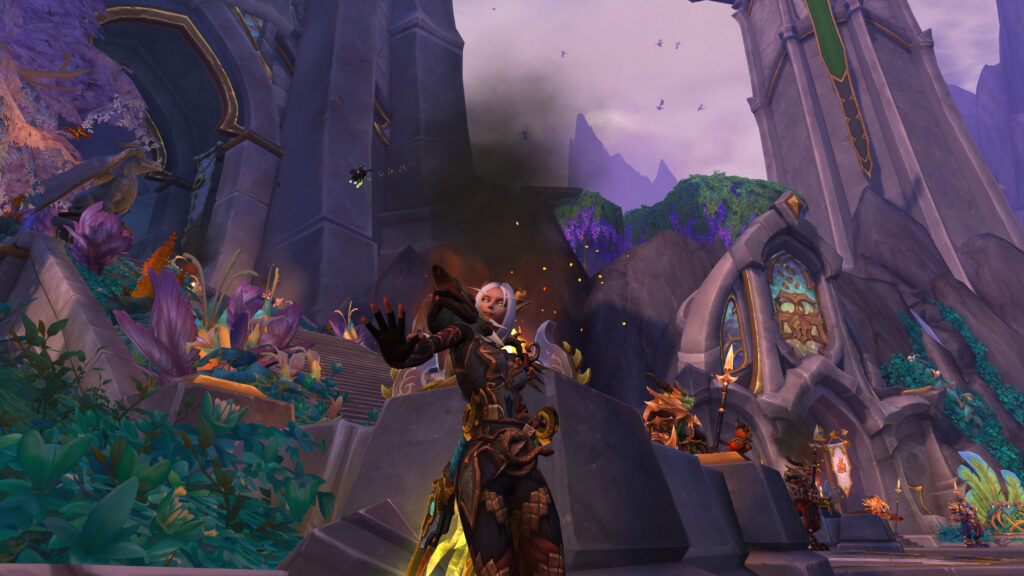
This maintains the Thematic Fidelity Score by ensuring each class excels in a distinct, niche competitive environment, achieving functional Competitive Parity Metric through differentiation rather than sameness.
The Trade-Off Matrix in Specialization Design
- **Homogenization Path:** High Competitive Parity Metric, but low Thematic Fidelity Score and minimal Mechanical Uniqueness Index.
- **Fantasy Path:** High Thematic Fidelity Score and Mechanical Uniqueness Index, but highly volatile Competitive Parity Metric.
- **Reconciliation Path:** Achieving functional balance by designing unique utility that is situationally superior, thus preserving Thematic Fidelity Score.
- **Core Design Principle:** Utility must be unique and non replicable by other classes to justify the specialization’s competitive slot.
Conclusion: Identity Through Specialized Excellence
The struggle between Class Fantasy and Balance is eternal, but resolution lies in specialized excellence. Designers must prioritize a high Thematic Fidelity Score and Mechanical Uniqueness Index by granting distinct, powerful utility that makes a specialization indispensable in specific situations.
This nuanced approach allows for the achievement of functional Competitive Parity Metric without succumbing to the homogenizing effects of universal ability distribution.
